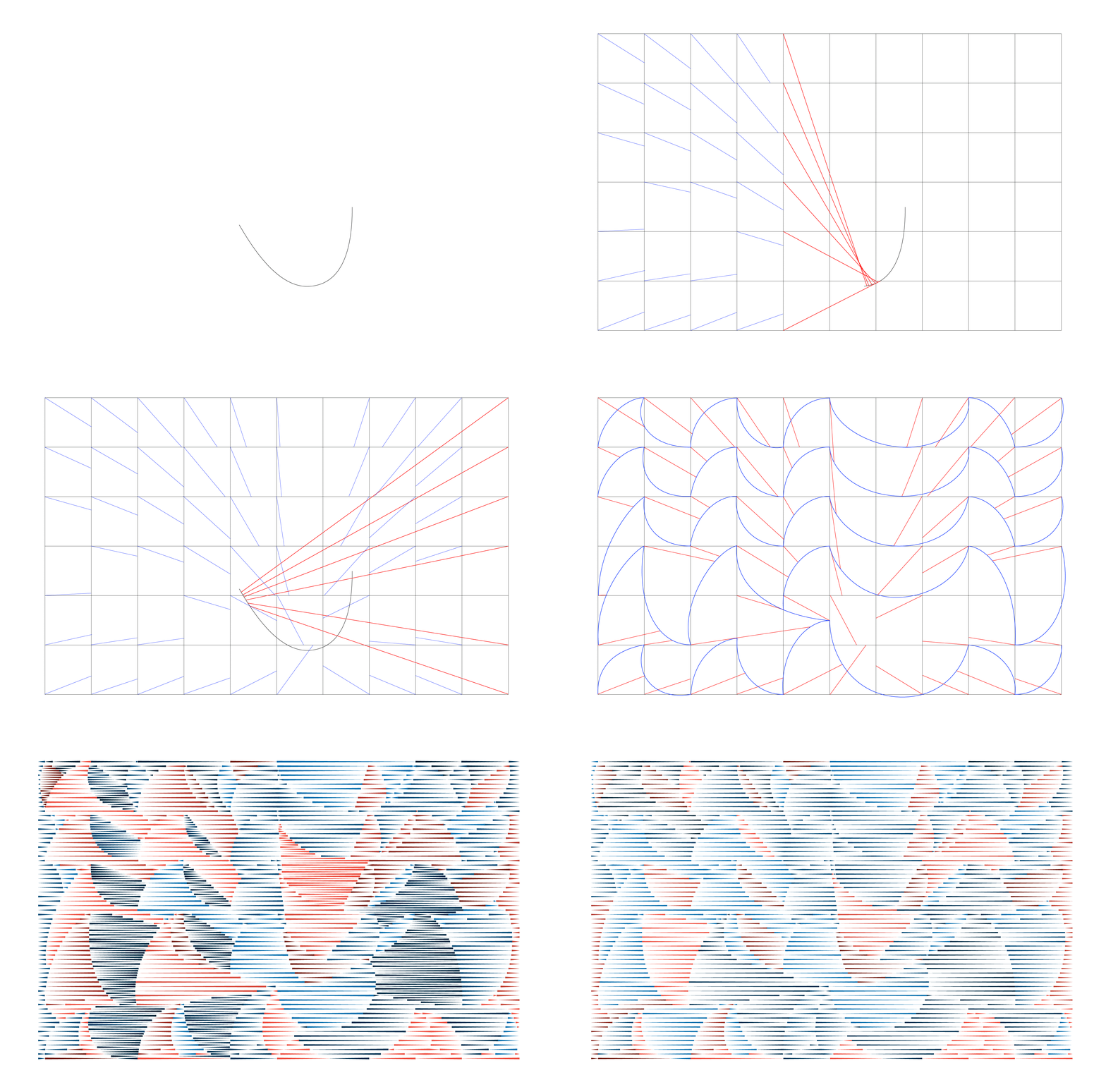
System Three is built as a tiling-based drawing system: a single unit rule generates an entire field through translation across a grid. Rather than composing each image by hand, the project treats composition as a repeatable structure, an underlying unit cell whose geometry is designed to remain coherent when it meets its neighbors. This places the work in the logic of modular pattern traditions, from architectural ornament to modernist systems: the visual outcome is not a motif applied to a surface, but a surface produced through transformation. Small, controlled variations within the unit, such as shift, scale, rotation, and density, create large-scale rhythm while preserving the integrity of the system, allowing the patterns to behave consistently across different formats and architectural contexts.
Printing the patterns on fabric, or laser-cutting them in paper, moves the system from a purely optical grid into a physical, responsive surface. The drawing is designed to behave consistently as a field, and both fabric and paper let that field be tested under real conditions through folding, tension, gravity, and light. The pattern becomes something you can interact with, not just read. In other words, the material introduces variables the screen cannot, including curvature, compression, and shadow, which reveal where the system holds and where it transforms.
Fabric also turns the unit cell logic into soft structure. As the textile drapes, repeats compress and expand, lines stretch and blur, and the grid’s order becomes elastic. The system remains coherent while the surface changes state, showing how modular geometry can generate atmosphere and depth when it is carried by a material that moves.